
Understanding Medical Cannabis Law in the United States
Medical marijuana law in the U.S. is really two systems layered on top of each other: federal law and state law. They don’t always agree, and 2026 has brought the biggest federal change in over 50 years. Below, we break down where the law stands today, what it means for patients, and how the rules differ from state to state.
Last updated: July 2026. Cannabis law changes often — always confirm current rules with your state’s health department before making decisions based on this page.
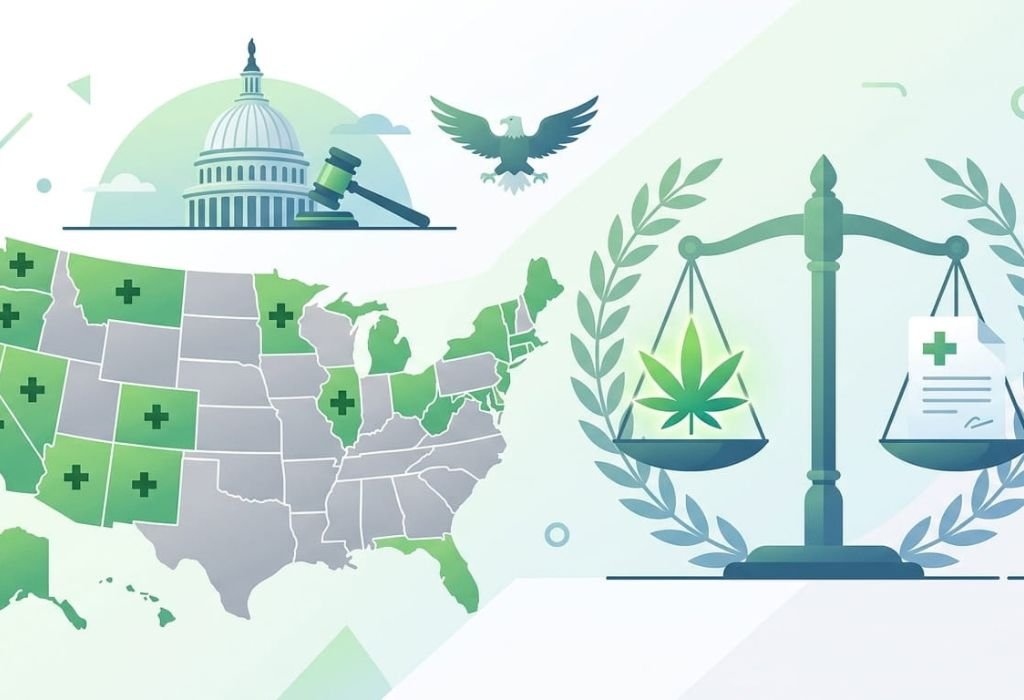
For decades, marijuana sat in Schedule I of the federal Controlled Substances Act — the same category as heroin, legally defined as having no accepted medical use. That changed in 2026.
Following a December 2025 executive order directing the Department of Justice to speed up the rescheduling process, the DEA issued a final order in April 2026 moving two specific categories of marijuana from Schedule I to Schedule III:
This is a meaningful shift for medical patients — Schedule III substances are recognized as having accepted medical use and lower potential for abuse than Schedule I or II drugs. It also removes a major tax penalty (Section 280E) that previously blocked state-licensed cannabis businesses from deducting normal business expenses.
A separate DEA administrative hearing beginning in mid-2026 is now considering whether to extend Schedule III status to all marijuana, including adult-use. That process is ongoing, and the outcome could reshape federal cannabis law further. We’ll continue updating this page as it develops.
Because cannabis is still restricted federally, each state runs its own independent medical marijuana program. That means the details — what conditions qualify, what ID you need, how much you can possess, and whether you need a physical card — can look completely different depending on where you live.
Most state medical marijuana programs share the same basic structure:
As of 2026, medical cannabis is legal in the large majority of U.S. states, and a growing number also allow adult-use sales. A handful of states still restrict access to low-THC or CBD-only products, and a few — like North Carolina — currently have no comprehensive medical cannabis program at all.

While every state maintains its own list, a core group of conditions is recognized almost everywhere medical cannabis is legal:
Some states go much further. For example, Connecticut and Illinois each recognize 30+ qualifying conditions, including things like Ehlers-Danlos syndrome, Tourette syndrome, and complex regional pain syndrome. Other states, like Florida and Georgia, keep a shorter, more tightly defined list. A licensed physician in your state will confirm during your evaluation whether your specific diagnosis qualifies.

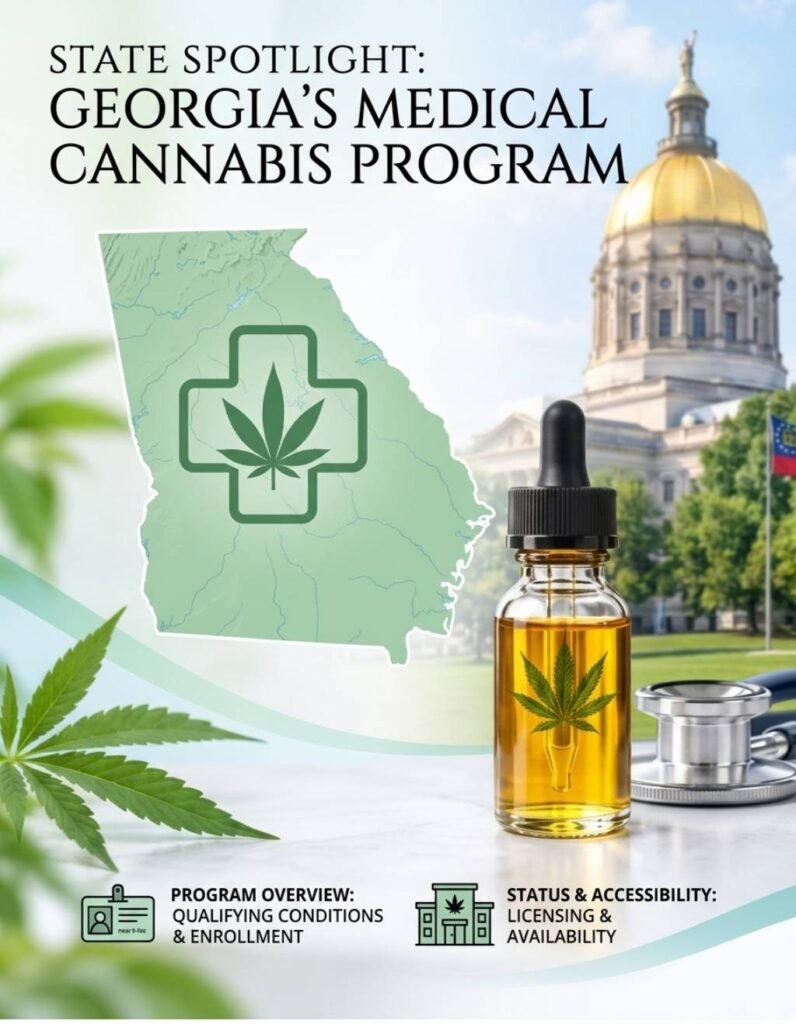
Georgia is a good example of how a state medical program can look very different from states with traditional dispensary-based systems. Under Georgia law (O.C.G.A. § 31-2A-18), the Georgia Department of Public Health operates a Low-THC Oil Registry, not a broader medical marijuana market:
This kind of variation is exactly why it’s worth reading your specific state’s laws rather than assuming national rules apply everywhere.
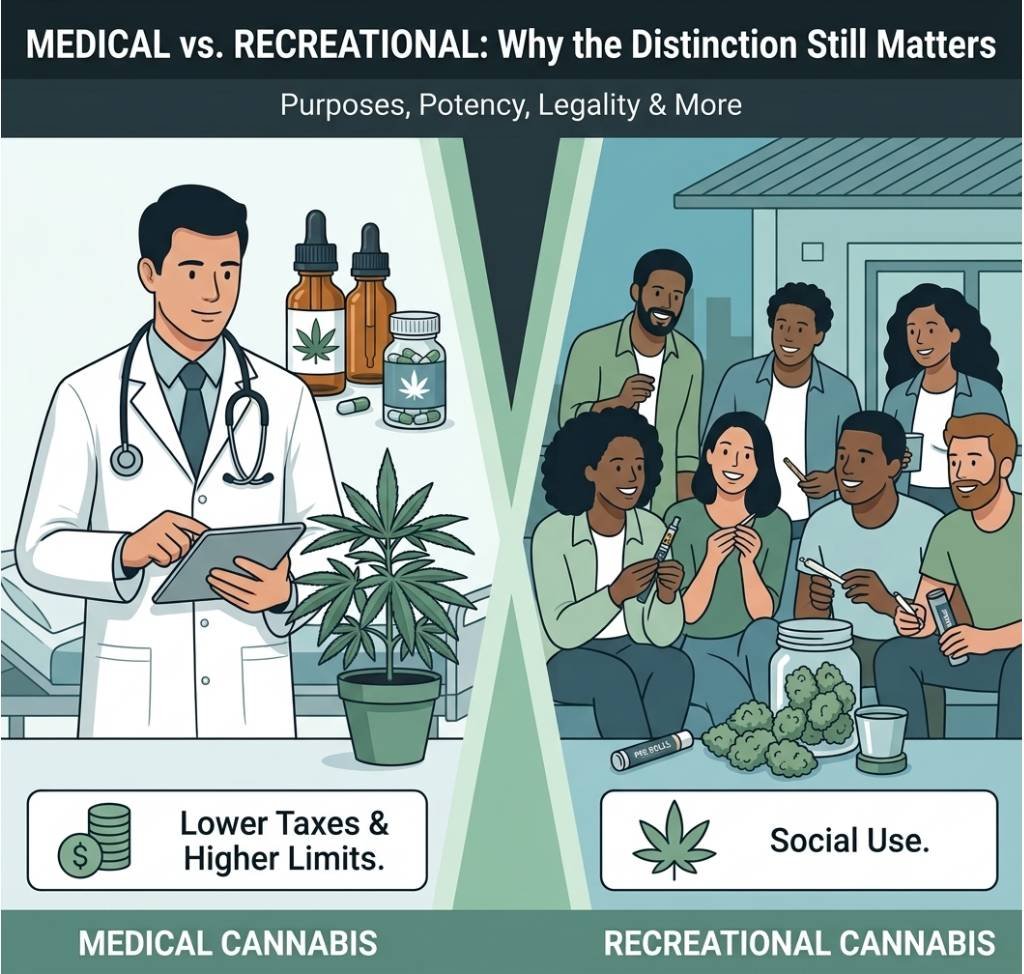
In states that allow both medical and recreational cannabis, patients often assume a medical card no longer offers much benefit. In most states, that’s not true. Registered medical patients typically get:
With 2026’s federal rescheduling applying specifically to state-licensed medical marijuana — not adult-use — the gap between medical and recreational status may widen further as federal protections and tax relief roll out for medical operators first.
Even within legal states, protections for medical patients are inconsistent. Depending on where you live, your state may or may not provide:
Because these protections vary so much — and because federal and state law don’t fully align — patients with specific legal concerns should speak with an attorney familiar with cannabis law in their state.
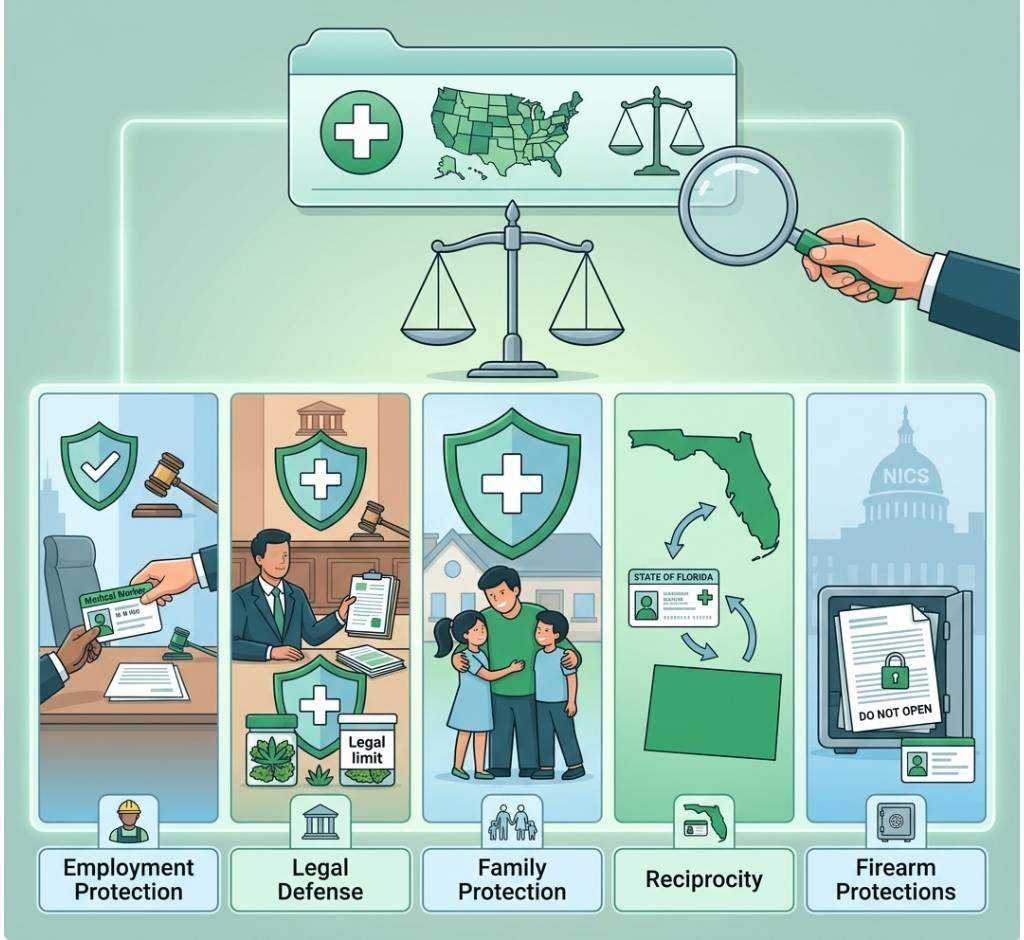
Most U.S. states now have a legal medical marijuana program, though the details differ significantly. Select your state below to see current requirements.
No. Federal rescheduling in 2026 moved FDA-approved cannabis products and state-licensed medical marijuana to Schedule III, but it did not legalize recreational marijuana federally, and marijuana outside a state medical program remains Schedule I.
Not directly. State programs still set their own rules for qualifying conditions, applications, and renewals. Rescheduling mainly affects federal tax and research policy for licensed medical operators.
Sometimes. Some states offer reciprocity for out-of-state medical patients; others don't recognize any out-of-state card. Always check your destination state's laws before traveling with cannabis, since it remains illegal to cross state lines with it under federal law.
Many states include broader categories, such as "chronic pain" or conditions "of the same kind or class" as those listed, and give physicians some discretion. Ask during your evaluation.
It depends on the state. Some states explicitly protect registered patients from employment discrimination; others don't. Federal rescheduling may eventually strengthen these protections, but that hasn't been fully tested yet.
Laws change state by state and year by year — but our licensed providers stay current on your state’s requirements so you don’t have to. Get evaluated online and find out if you qualify for a medical marijuana card today.