
Getting a medical marijuana card can feel confusing — every state has its own rules, its own list of qualifying conditions, and its own application process. Our patient guides break it all down in plain language, so you know exactly what to expect before you book your evaluation.
Whether you’re applying for the first time, renewing an existing card, or just trying to figure out if your condition qualifies, this page is your starting point. Below, you’ll find step-by-step guidance on the application process, a breakdown of qualifying medical conditions by state, what documents you’ll need, and answers to the questions patients ask us most.

Med Cards Now makes the process fast, private, and 100% online — no waiting rooms, no paperwork to mail in.
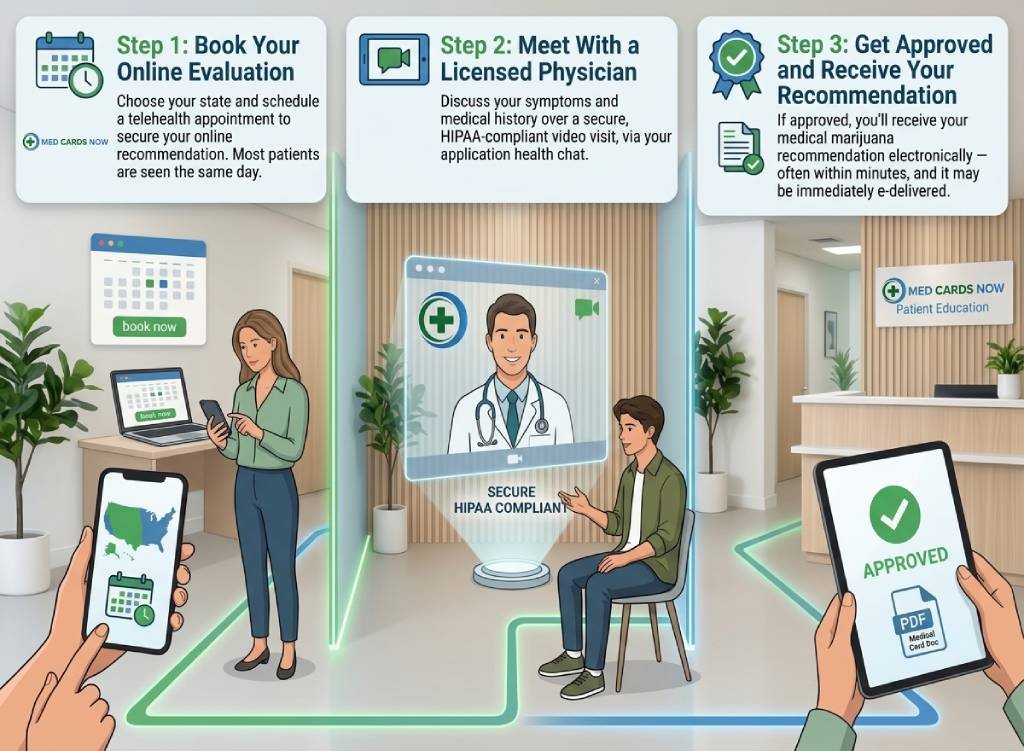
Step 1: Book Your Online Evaluation Choose your state and schedule a telehealth appointment with a licensed medical provider. Most patients are seen the same day.
Step 2: Meet With a Licensed Physician Discuss your symptoms and medical history over a secure, HIPAA-compliant video visit. Your provider will determine whether medical cannabis is an appropriate option for your qualifying condition.
Step 3: Get Approved and Receive Your Recommendation If approved, you’ll receive your medical marijuana recommendation electronically — often within minutes — so you can visit a licensed dispensary right away. Some states also require registering for a physical state-issued card; we’ll walk you through that step too.
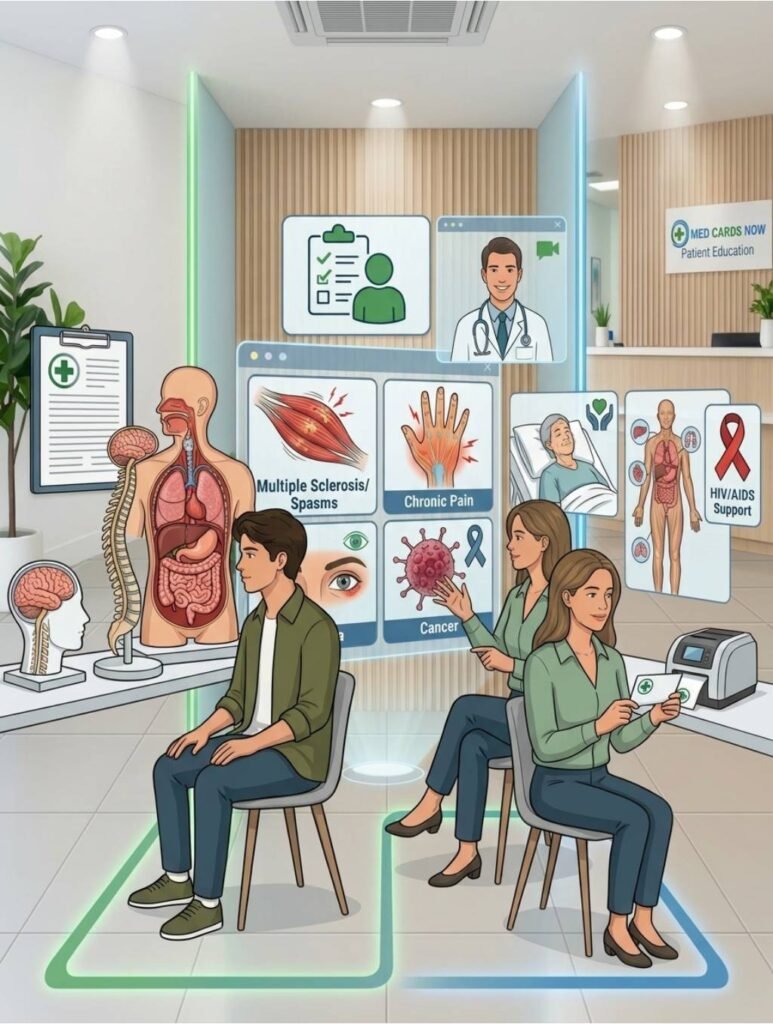
Every state maintains its own list of qualifying medical conditions, and a licensed physician must confirm that a patient’s diagnosis fits the state’s criteria before issuing a recommendation. While the specifics vary, many states recognize a similar core group of conditions, including:
Not sure if your condition qualifies? Many states also include broader language such as “any chronic condition causing severe pain” or leave room for physician discretion. During your evaluation, your provider will review your medical history and let you know if you qualify — even if your exact diagnosis isn’t listed here.
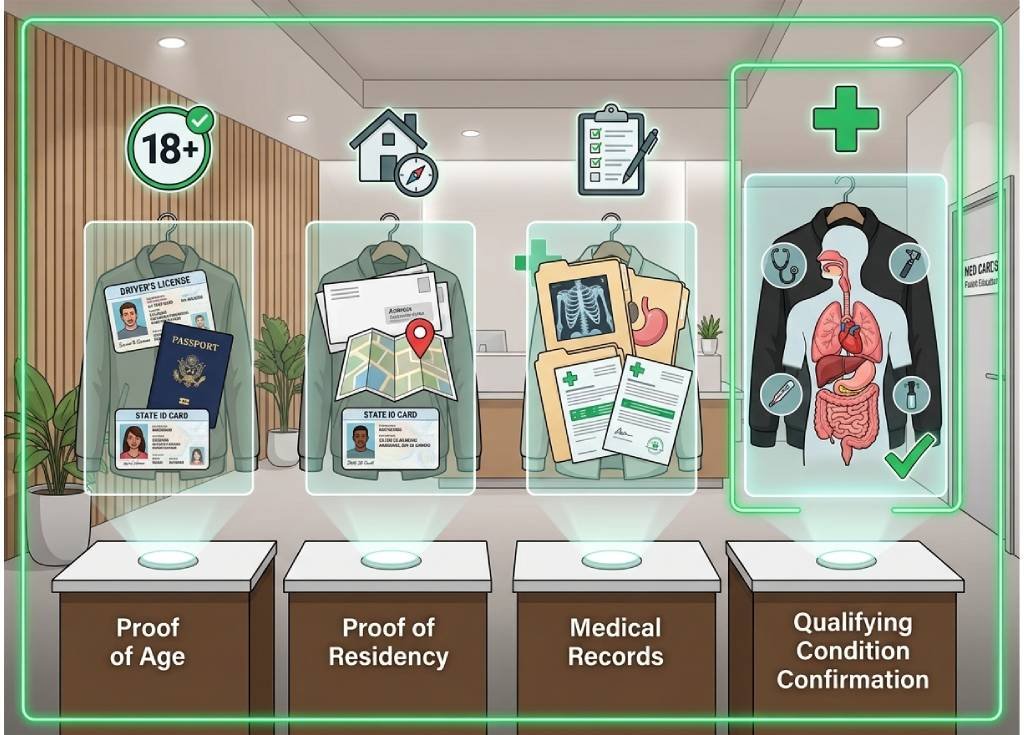
Requirements differ slightly by state, but most applications ask for:
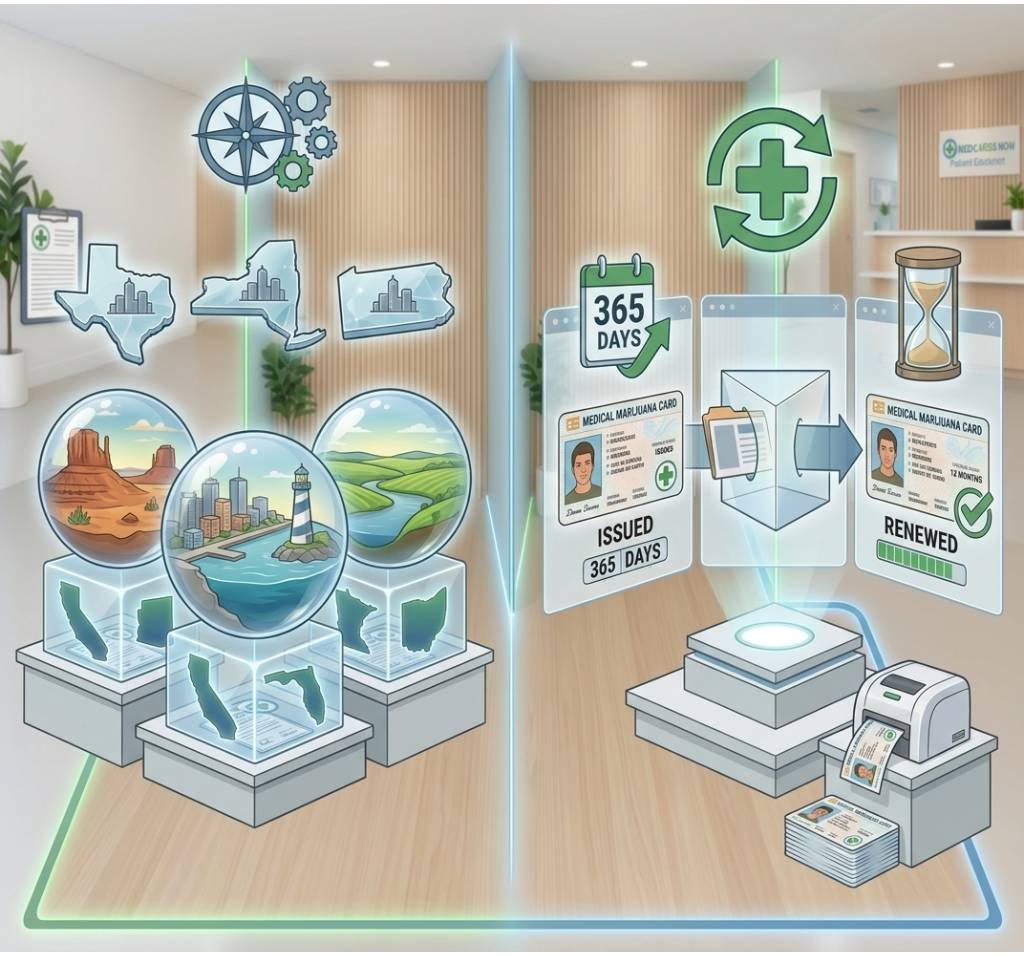
Medical cannabis laws, qualifying conditions, fees, and renewal timelines vary significantly from state to state. Select your state below to view detailed requirements, program costs, and step-by-step instructions specific to where you live.
(Existing “Choose Your State” grid component stays here — Arizona, California, Connecticut, Florida, Georgia, Illinois, Iowa, Louisiana, Maine, Maryland, Massachusetts, Michigan, Minnesota, Missouri, Nevada, New Jersey, New York, Ohio, Oklahoma, Pennsylvania, Texas, Virginia, Washington, West Virginia.)
Medical cards aren’t permanent — most states require annual renewal to maintain access to legal dispensaries, patient-only pricing, and program protections. We recommend starting your renewal 30–60 days before your card expires to avoid a lapse in coverage. Renewal typically follows the same telehealth process as your initial evaluation: a quick visit with a licensed provider to reconfirm your qualifying condition.
In states with both medical and recreational (adult-use) programs, patients often still choose to get — or keep — a medical card because it can unlock:

Pricing depends on your state and any separate state registration fees. Visit your state's guide page for exact evaluation and renewal costs.
Most patients complete their telehealth evaluation and receive a decision the same day. If approved, your electronic recommendation is typically available immediately, with any physical card arriving by mail afterward per your state's process.
You may still qualify. Many states include broader categories like chronic pain or leave room for physician judgment. Your provider will let you know during your evaluation.
Yes. All evaluations are conducted through a secure, HIPAA-compliant platform, and your medical information is never shared without your consent.
Some states offer reciprocity for out-of-state medical patients, while others do not. Check your destination state's rules before traveling with cannabis products.
Not usually. While records can support your evaluation, most states allow a licensed physician to determine eligibility based on a consultation alone.
If your card lapses, you lose access to medical-only pricing, higher possession limits, and other program protections until you renew or reapply.
Our licensed providers are standing by to help you get evaluated quickly, privately, and affordably — no appointment necessary in most states, and you’re only billed if approved.